Shopping centres and premises within premises:
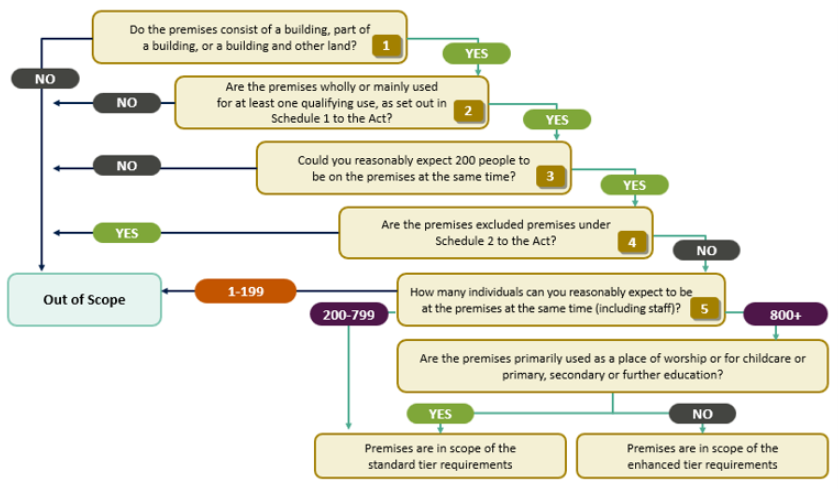
Tenants: The legislation recognises that qualifying premises can exist within other qualifying premises. For example, where a department store within a shopping centre meets the thresholds in its own right, both the shopping centre operator and the department store tenant will be responsible persons for their respective premises and must co-ordinate with each other, so far as is reasonably practicable, to ensure that their procedures and measures do not conflict. This might include deconflicting evacuation plans and complementing each other's lockdown and communication plans.
Smaller stores within the shopping centre that do not meet the 200-person threshold are not qualifying premises and have no direct statutory obligations, but if the shopping centre falls within the enhanced tier, the retail tenant may still be required to co-operate with the shopping centre's responsible person by, for example, participating in evacuation procedures. Landlords should consider whether their existing leases provide sufficient mechanisms to achieve this. Tenants should consider what obligations they may be asked to take on.
Landlords: While landlords who have leased out their premises will not usually be the responsible person, where the responsible person needs the landlord's permission, support or other co-operative steps to comply (for instance, by granting consent to structural alterations), the landlord must co-operate so far as is reasonably practicable. Landlords should review their leases now to understand what consent mechanisms exist and whether they are adequate.
Outsourced service providers: Even where an outsourced facilities or event management provider is not the responsible person, it is often likely to be regarded as having at least some degree of control over the premises. In that case, it will be required to co-operate with the responsible person, so far as reasonably practicable.